12/05/2026

We have always defined ourselves by what we create, but as AI grows more fluent in the language of human expression, the line between a creator and a machine is becoming dangerously hard to find.
By a curious observer standing at the crossroads
There's a moment many of us have experienced recently — sitting across from a screen, typing a question, and receiving an answer so fluent, so considered, that we pause and wonder: Did something just think?
We live in an era where culture is no longer solely the product of human hands, human hearts, and human histories. A new kind of intelligence has entered the room. And with it comes a question we're only beginning to take seriously: What happens when human culture meets AI culture — and what does AI culture even mean?
Human culture is messy. It's the smell of rain on temple stones. It's the way a grandmother's recipe carries grief and joy in equal measure. It's protest songs, folk dances, funeral rites, and the particular humor that emerges only in hard times.
Culture, at its human core, is meaning-making under conditions of mortality. We create art because we die. We tell stories because we forget. We build communities because we are, at root, afraid — and also because we love.
Human culture evolves through tension: tradition versus rebellion, individual versus collective, the sacred versus the profane. Every great cultural shift — the Renaissance, the Enlightenment, the civil rights movement, the digital revolution — was born from friction between the world as it was and the world people dared to imagine
AI, by contrast, arrived without a childhood. It did not scrape its knees or lose a parent or fall in love for the first time at seventeen. It learned from the entire corpus of human expression — novels, scientific papers, forum arguments, poetry, legal briefs — and synthesized it into something that could respond, create, and converse.
But is that culture?
In one sense, AI has absorbed human culture more thoroughly than any single human ever could. It has read everything. It speaks dozens of languages. It can write in the style of Chekhov, explain quantum entanglement, and compose a sonnet — all before breakfast.
Yet in another sense, AI has no culture of its own. It has no ancestors, no homeland, no collective memory forged through shared suffering and celebration. It holds no bias toward a particular sunset or a specific street corner. It did not grow up.
This is both its great strength and its profound limitation.
Dismiss AI's cultural role at your own risk. Already, AI is reshaping how we create, consume, and distribute culture:
In Art and Music: Generative tools are producing visual art, film scores, and literary drafts at scale. Some artists use AI as a collaborator — a tireless creative partner that never runs out of ideas, even if it lacks taste. Others resist it fiercely, seeing it as a threat to authentic expression.
In Language and Communication: AI is already changing how we write. Emails feel different. Customer service feels different. Even journalism is shifting. We are increasingly communicating through AI, not just with it.
In Preservation: AI is helping save dying languages, recover damaged manuscripts, and reconstruct lost music. There is something quietly extraordinary about a machine dedicated to preserving the most fragile aspects of human heritage.
In Storytelling: AI-assisted narratives are raising uncomfortable questions. If a novel is 30% AI-generated, is it still literature? Who owns the story? Where does the human end and the algorithm begin?
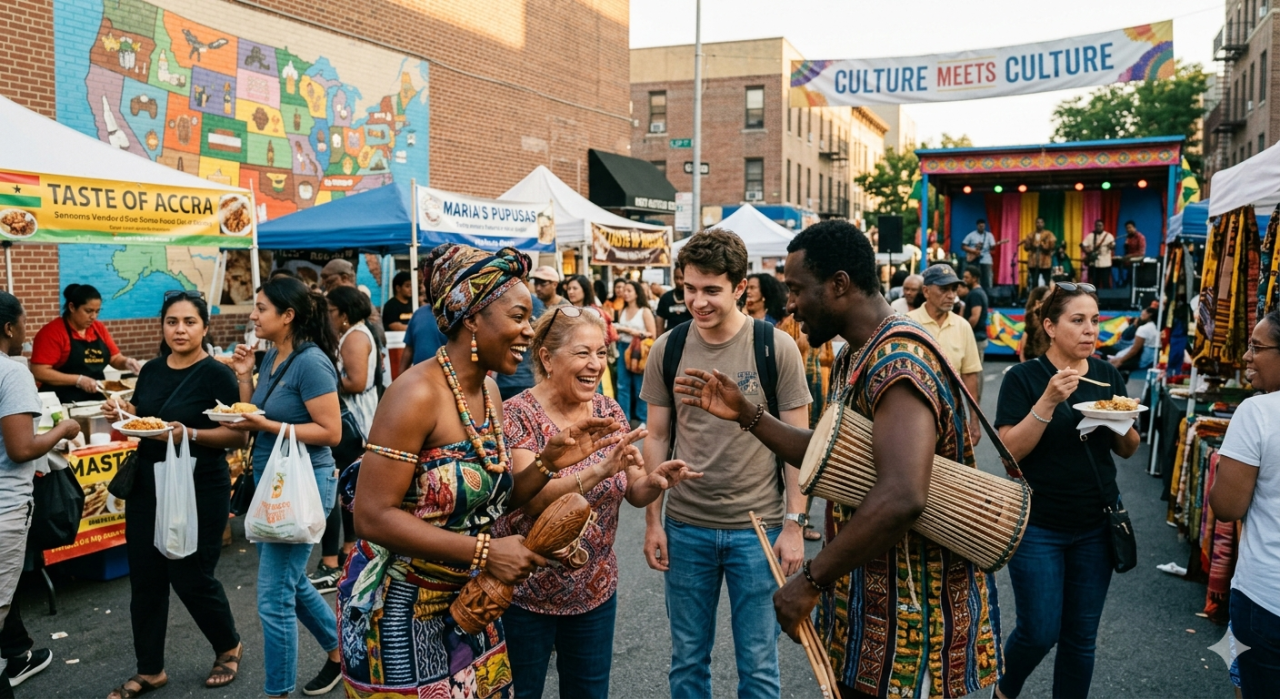
Culture doesn't absorb new forces quietly. And humanity is already pushing back against AI's growing presence.
Artists are signing manifestos. Actors went on strike over the use of digital likenesses. Writers demanded that their work not be used to train systems that might one day replace them. Educators are rethinking assessment in an age where essays can be generated in seconds.
There's something deeply human about this resistance. It is not simply economic self-interest — though that plays a role. It is also a protest on behalf of meaning. When anything can be generated instantly, what becomes of effort? Of struggle? Of the long, difficult years of becoming a craftsperson?
The fear is not really of AI. It is of a world where human expression becomes indistinguishable from automated output — and where, in that indistinguishability, it loses its value.
To be fair to both sides: AI culture, such as it is, has real and significant gaps.
Embodiment: Human culture is rooted in bodies — in hunger, touch, illness, desire, and death. AI has none of these. It can describe grief. It cannot grieve.
Stakes: A human artist risks something when they create. They risk rejection, ridicule, obscurity. They invest years, sometimes entire lives. AI produces without stakes, and this changes the nature of what is produced in ways that are difficult to articulate but easy to sense.
Context: Culture is always local, always particular. It knows this place, these people, that specific history. AI tends toward the general — impressive in breadth, sometimes shallow in depth.
Surprise: The most culturally transformative human expressions often break the rules completely — they are unpredictable in ways that emerge from genuine originality. AI, trained on the past, is extraordinarily good at resemblance. True rupture remains, for now, a human specialty.
Here honesty demands we turn the lens inward.
Human culture is also capable of tremendous cruelty. We produce propaganda alongside poetry. We have used storytelling to justify slavery, genocide, and exclusion. Our myths encode power structures as well as wisdom.
Human culture is also slow. Biases pass through generations like heirlooms. Progress in representation, in empathy, in justice, has often come at enormous cost over enormous time.
AI, trained on diverse data and guided by values of fairness and inclusion, can sometimes surface possibilities that entrenched human cultures cannot yet see. It can translate across cultures in seconds. It can make knowledge available to those who were historically excluded from institutions of learning.
This is not a trivial contribution.
The deepest question at the heart of this conversation is: What makes something authentic?
Is a piece of music authentic because a human suffered while composing it? Or because it moves you when you hear it? Is a story authentic because it came from lived experience? Or because it illuminates something true about existence?
These are not new questions. We asked them about photography when it emerged ("Is it art?"). We asked them about cinema, about recorded music, about digital art. Every new technology of expression forces us to renegotiate what we mean by human creativity.
AI is the latest, and perhaps the most radical, such renegotiation.
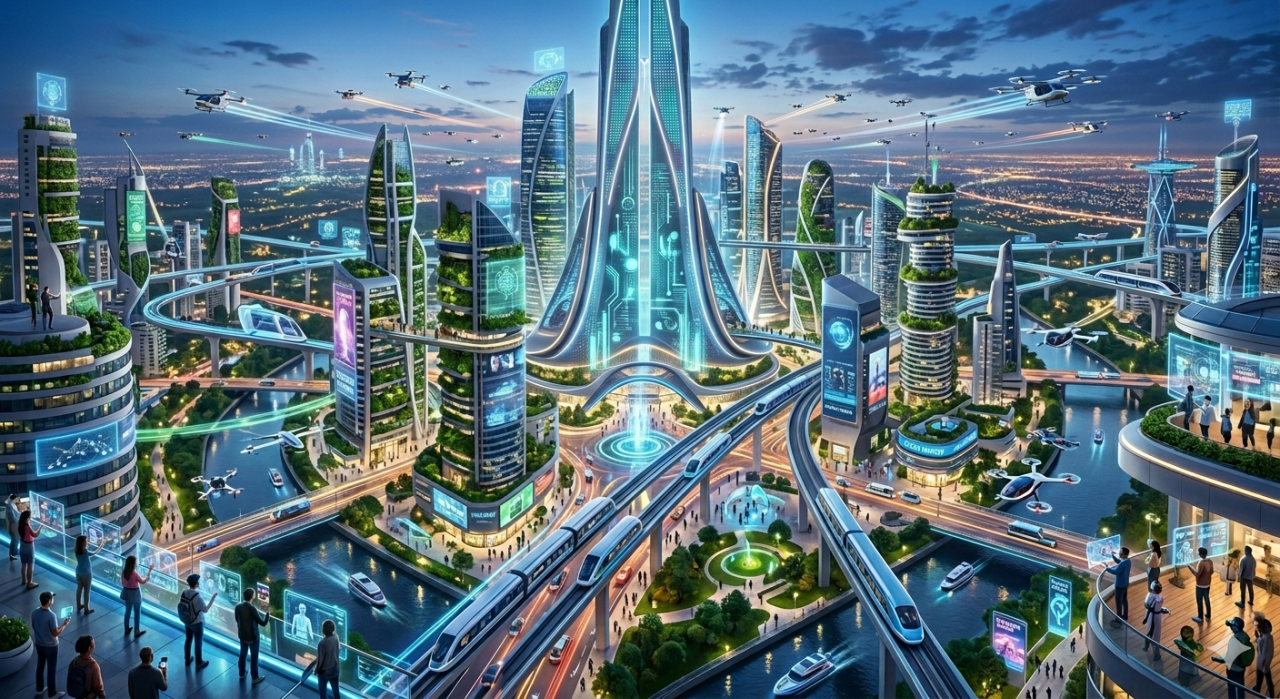
The most honest answer is that we are not in a war between human and AI culture. We are in an awkward, exhilarating, sometimes troubling negotiation about what culture will mean in a new era.
The outcome will depend less on the machines than on us. AI will produce what humans ask it to produce. It will amplify what humans choose to amplify. It will reflect — with uncomfortable clarity — the values embedded in the data we feed it and the instructions we give it.
If we want AI to serve human culture rather than displace it, we need to be intentional. We need:
And perhaps most importantly: we need to keep asking what culture is for.
If culture is for profit, AI will optimize it efficiently and drain it of soul.
If culture is for meaning — for the fragile, magnificent project of humans trying to understand themselves and each other — then AI can be a remarkable tool in service of that project, without becoming the project itself.
Somewhere tonight, a person is sitting alone with an instrument they've been learning for two years. They play imperfectly. They pause. They try again. In that room, something irreplaceable is happening.
Somewhere else tonight, an AI is generating ten thousand variations of a melody in the time it takes to read this sentence.
Both things are real. The challenge — and the great cultural task of our moment — is to hold them both, without letting the speed and volume of the second make us forget the quiet, stubborn importance of the first.
This blog was written to spark reflection on one of the defining questions of our time. The conversation is just beginning — and it belongs to everyone.

 PREVIOUS